AI adoption and the implications for search

Artificial intelligence is no longer a fringe experiment in the UK, it is becoming embedded in everyday decision-making.
Our latest nationwide survey reveals a country in transition: adoption is uneven and trust is still forming but a significant and growing share of consumers are already using AI tools as part of their search activities and research tools.
In some regions and demographics, AI is beginning to rival traditional search.
We have covered this extensively in previous articles and events. What is emerging is not a simple story of hype, but an actual behavioural shift.
AI is moving from curiosity to everyday use, particularly in product research, comparison and recommendations.

In this article we will look at the state of adoption of AI in search today but also attempt to determine a propensity for using AI more generally to make some predictions about how use will evolve.
Survey: 253 responses, February 2026
AI adoption varies across the UK
The first thing we wanted to look at was how much people were using AI generally at the moment, and how that varied between regions and age groups.
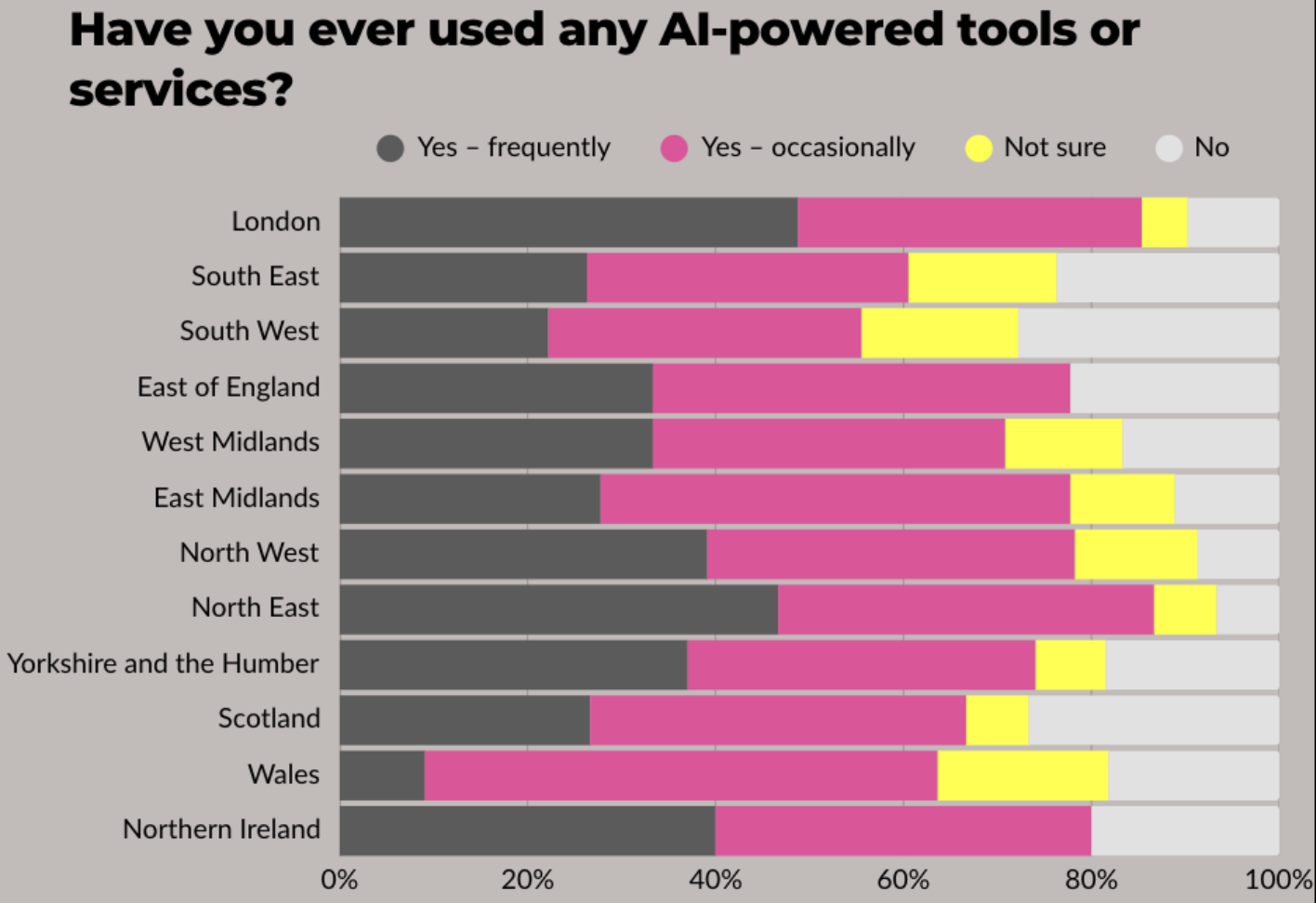
We found that AI usage does vary by region. London leads in frequent AI use, which may be driven by higher exposure through professional sectors such as tech, finance, media and creative industries.
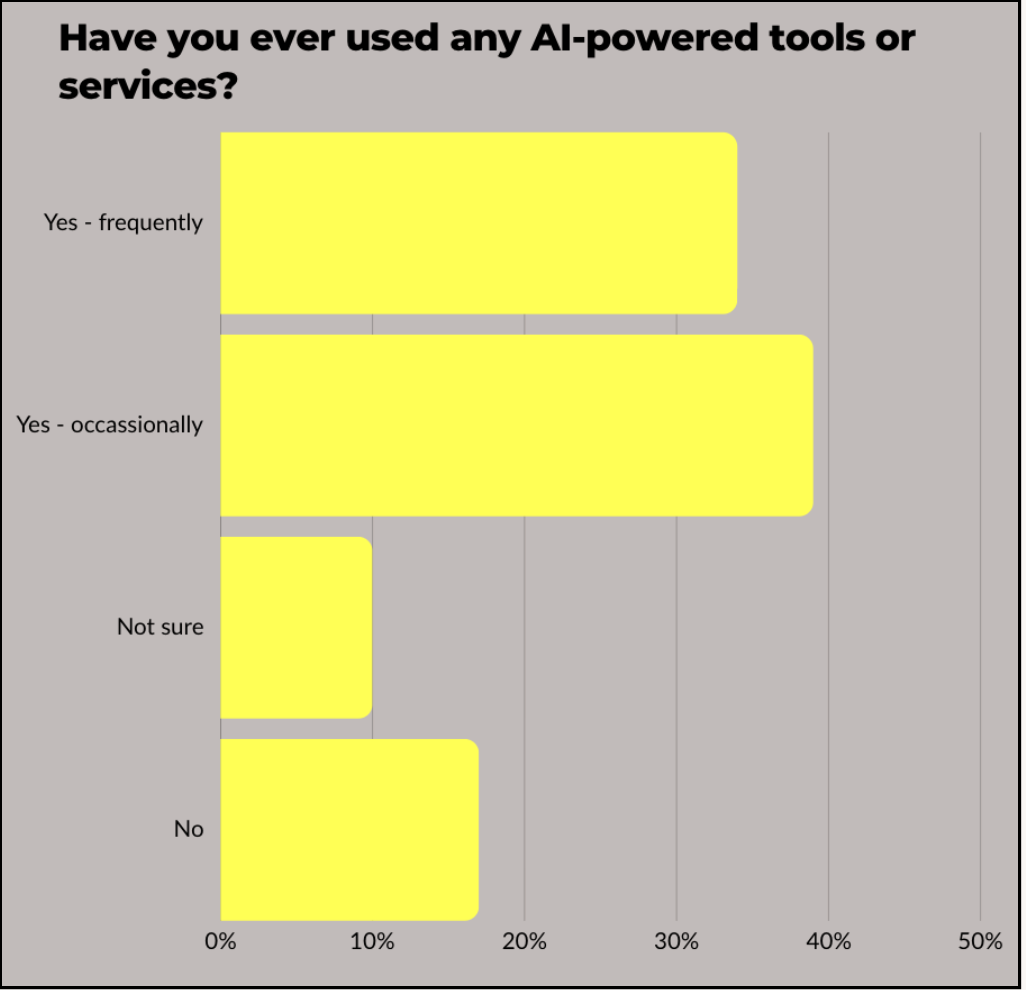
North East and Northern Ireland also show strong uptake.
This is notable given that the North East has fewer 25–34-year-olds than some other regions, such as Yorkshire which suggests adoption is not purely age-driven.
South West and Wales show the lowest adoption, with more people saying they’ve never used AI or aren’t sure if they have.
This may more rural populations or older demographic profiles rather than simply regional.
AI adoption for searching online is on the rise across the UK
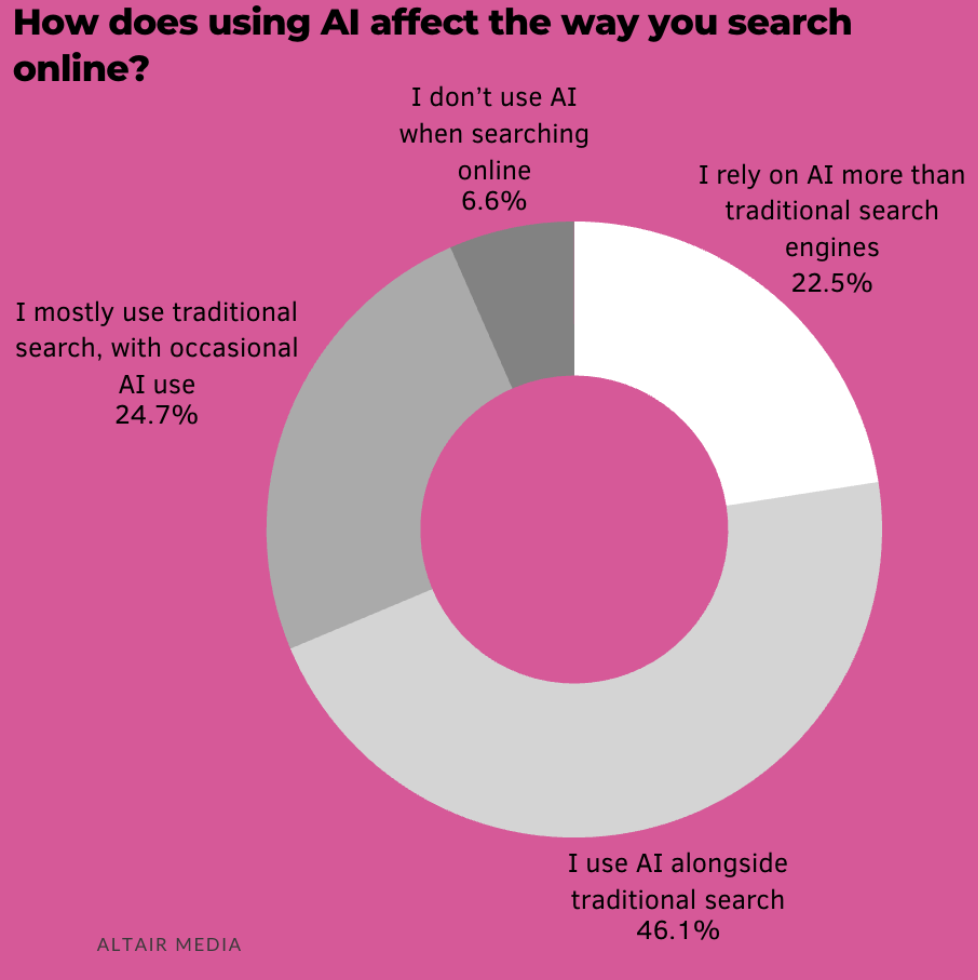
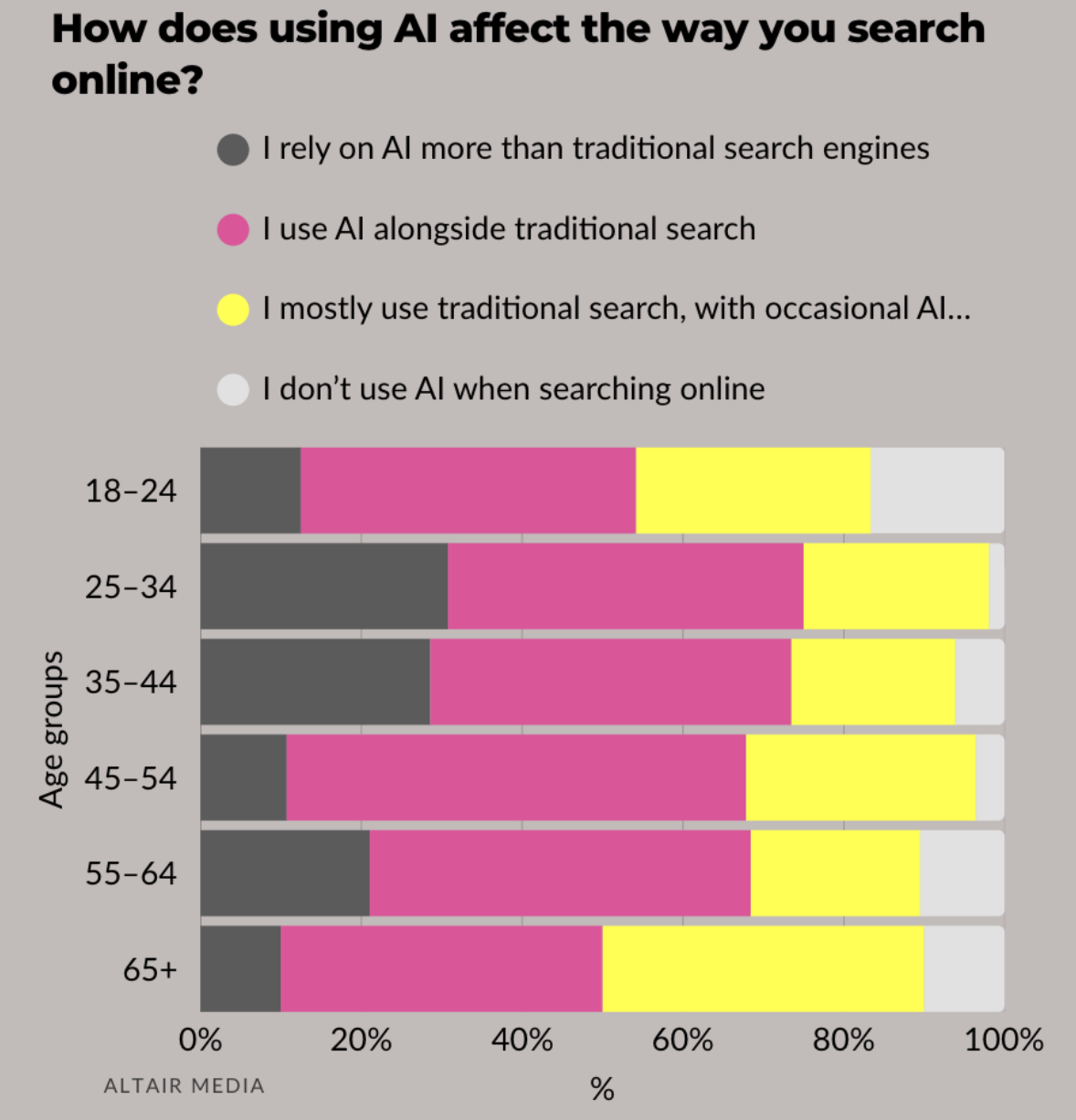
Overall, around 22% of respondents say they now rely on AI with only 6% not using it at all.
A large majority of respondents are using both traditional and AI search, at least occasionally.
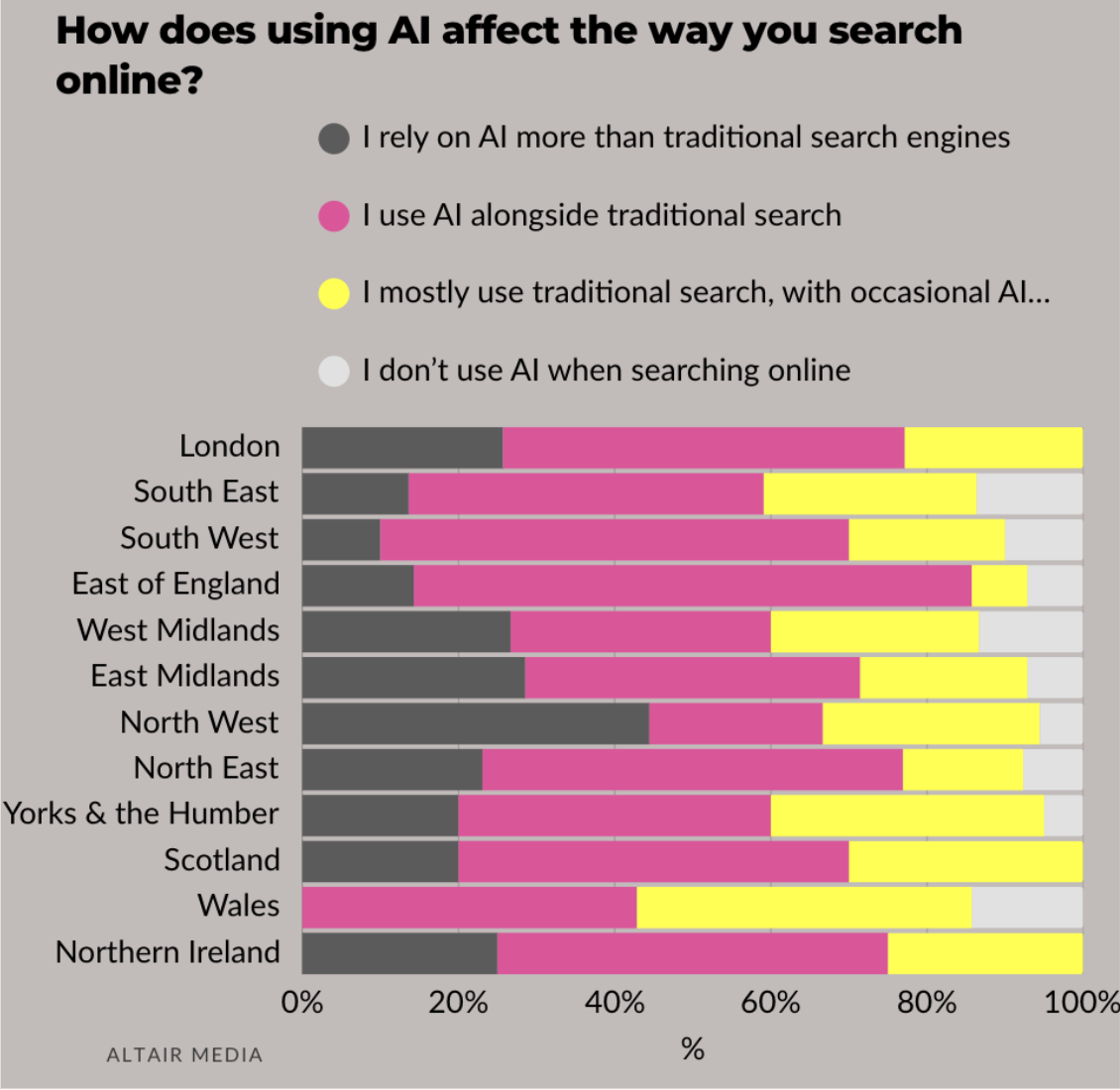
We so see a regional difference in people reporting that they use AI more frequently than traditionally search.
In the North West, for example, 44% use AI more than traditional search.
In all regions, with the exception of Wales, over half of respondents are using AI either more than traditional search or along side it.
The number of people not using it at all is very small and was zero in both London and Northern Ireland.
There appears to be a link with higher levels of education as well, approximately 40% of those educated beyond undergraduate degree level choosing AI over search, particularly in London and among the 25–34 age group.
This suggests brands need to increasingly optimise for AI discovery in order to ensure they are visible.

The AI conversation is ongoing
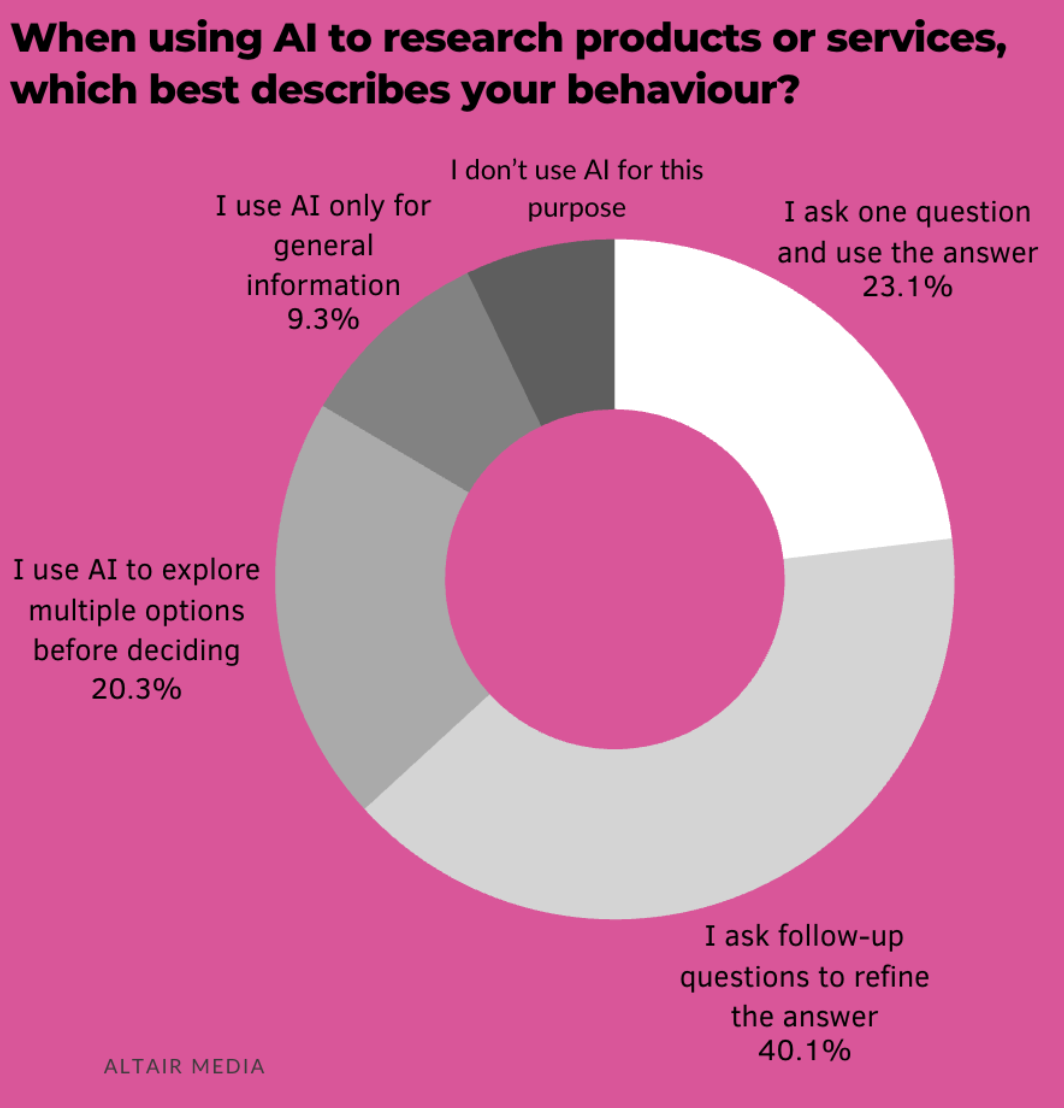
For all groups, use of AI for researching products and services is practical.
Interestingly, around 40% use AI for follow-up questions to refine the initial answer which is almost double the amount that only ask a single question and use that answer.
This suggests that AI assisted search is becoming more embedded in the research process.
Product research is the leading reason for AI use
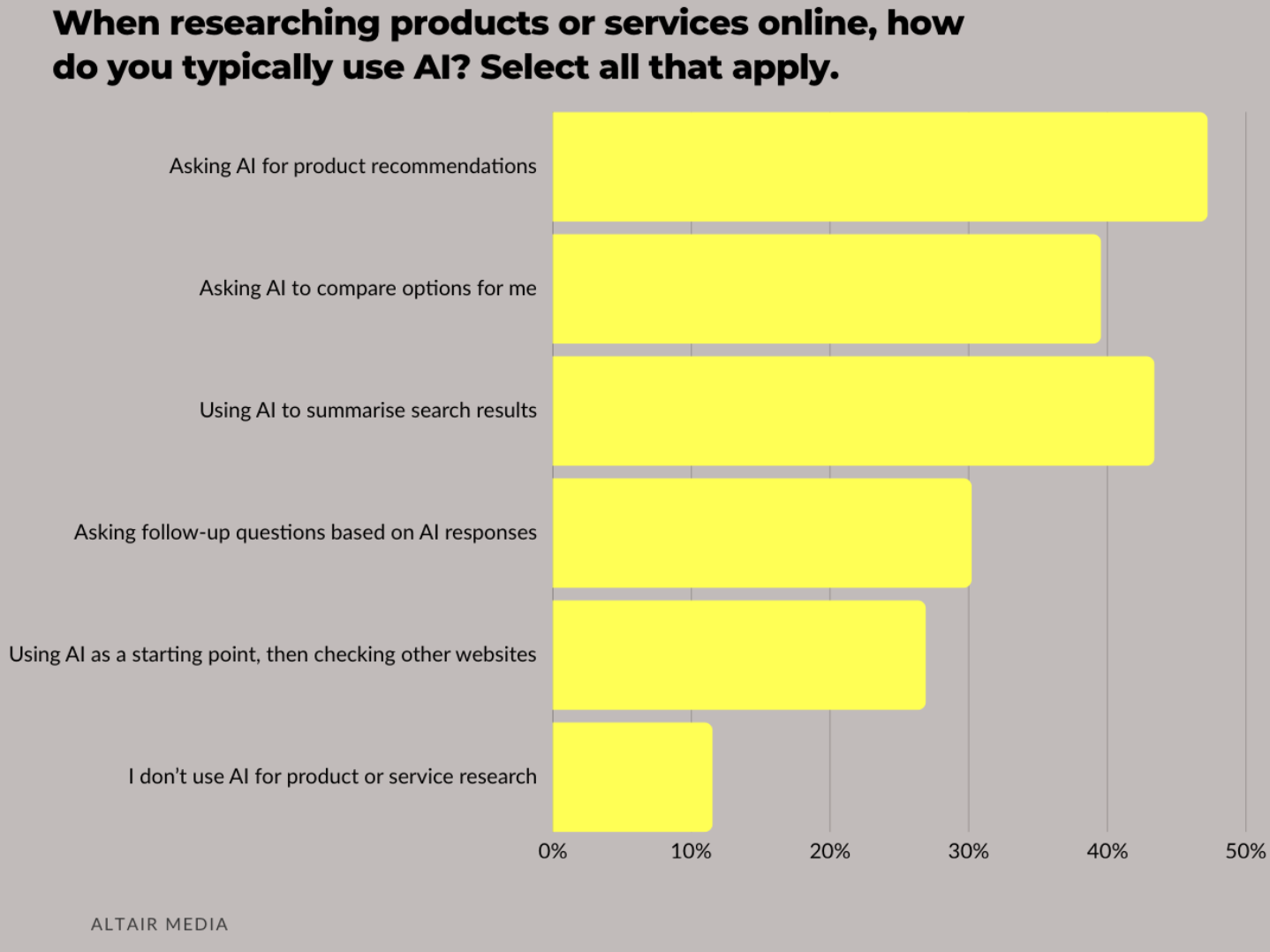
Overall, the most common reason to use AI is researching products, closely followed by summarising search results and comparing options.
This pattern is similar in each of the age groups, however it is notable that in the 24-34 age group the highest number of respondents are specifically looking for recommendations over research and comparisons.
In London we also see high uptake across the categories suggesting that AI is already embedded in mid-funnel behaviour, particularly among younger urban audiences.
Technology and Travel searches lead the way
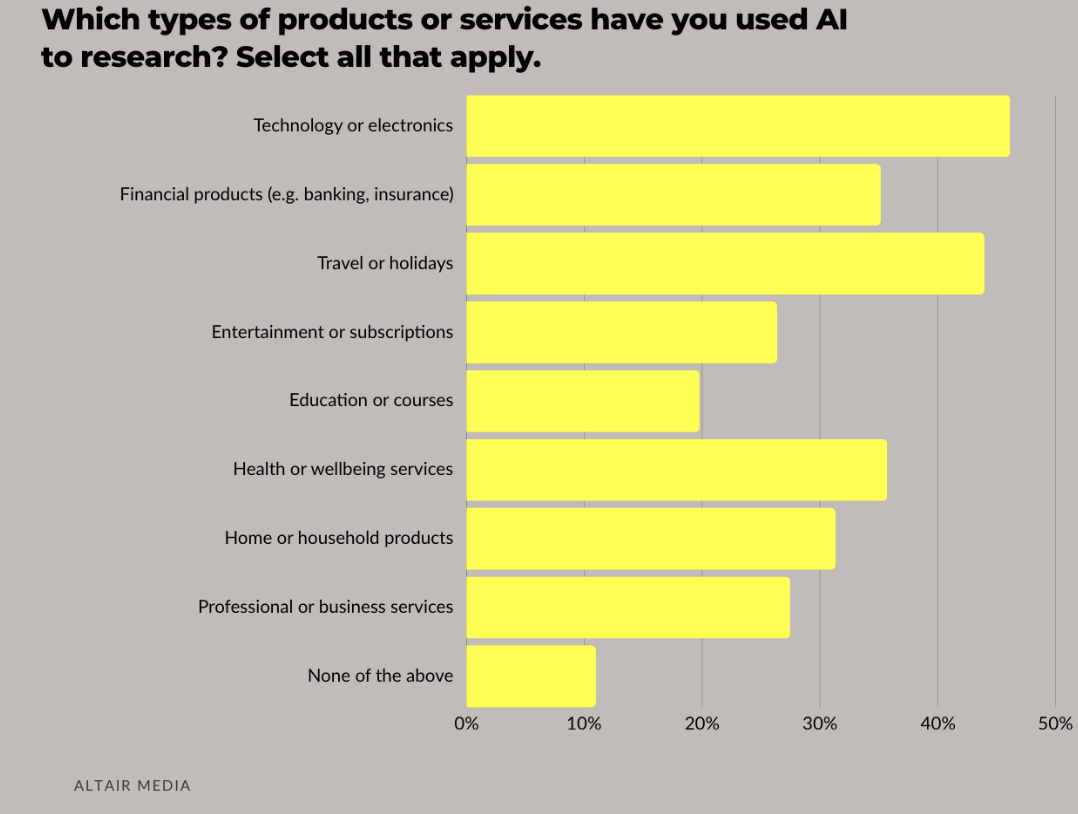
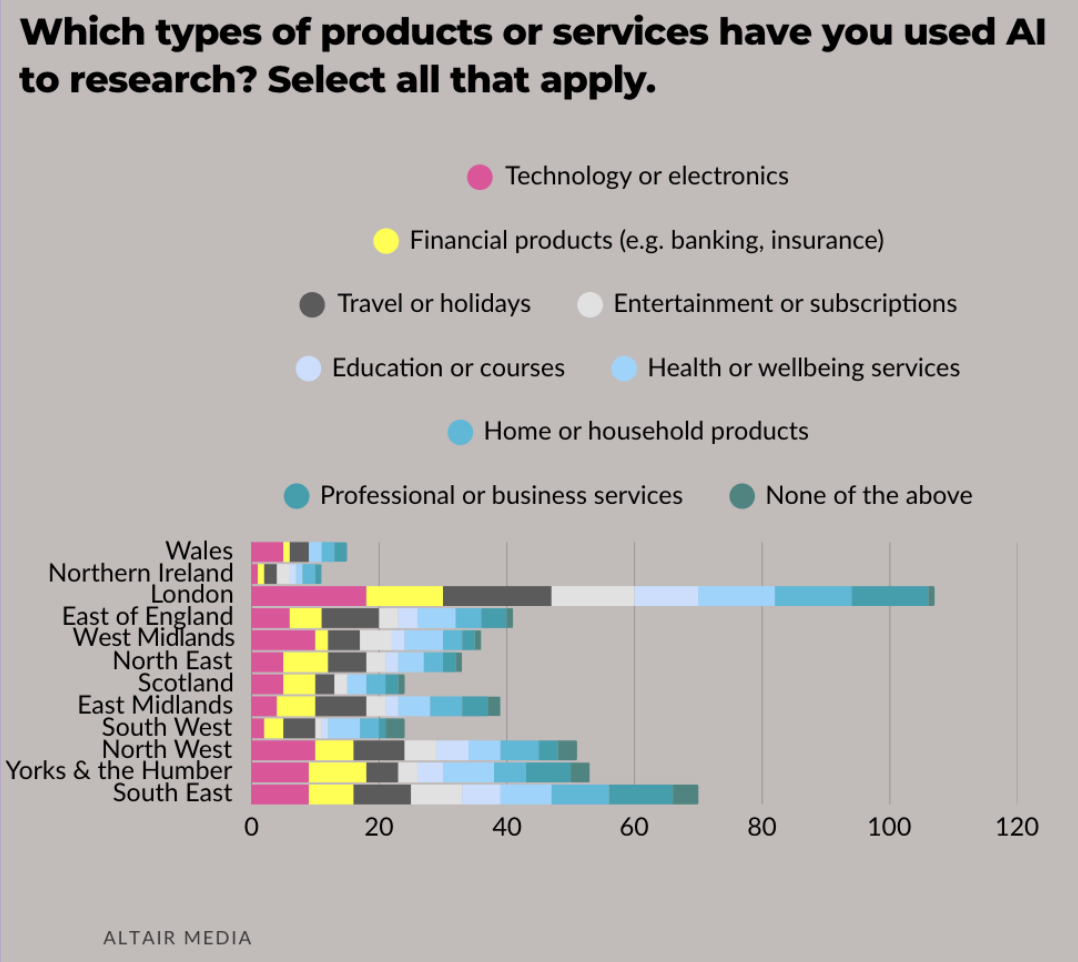
Overall, there was a strong response for searching in the travel and tech categories, suggesting high-consideration and information-heavy sectors are benefiting most from AI capability.
In London and the South East in particular, sizable groups also use AI to research business services.
Question marks around trust
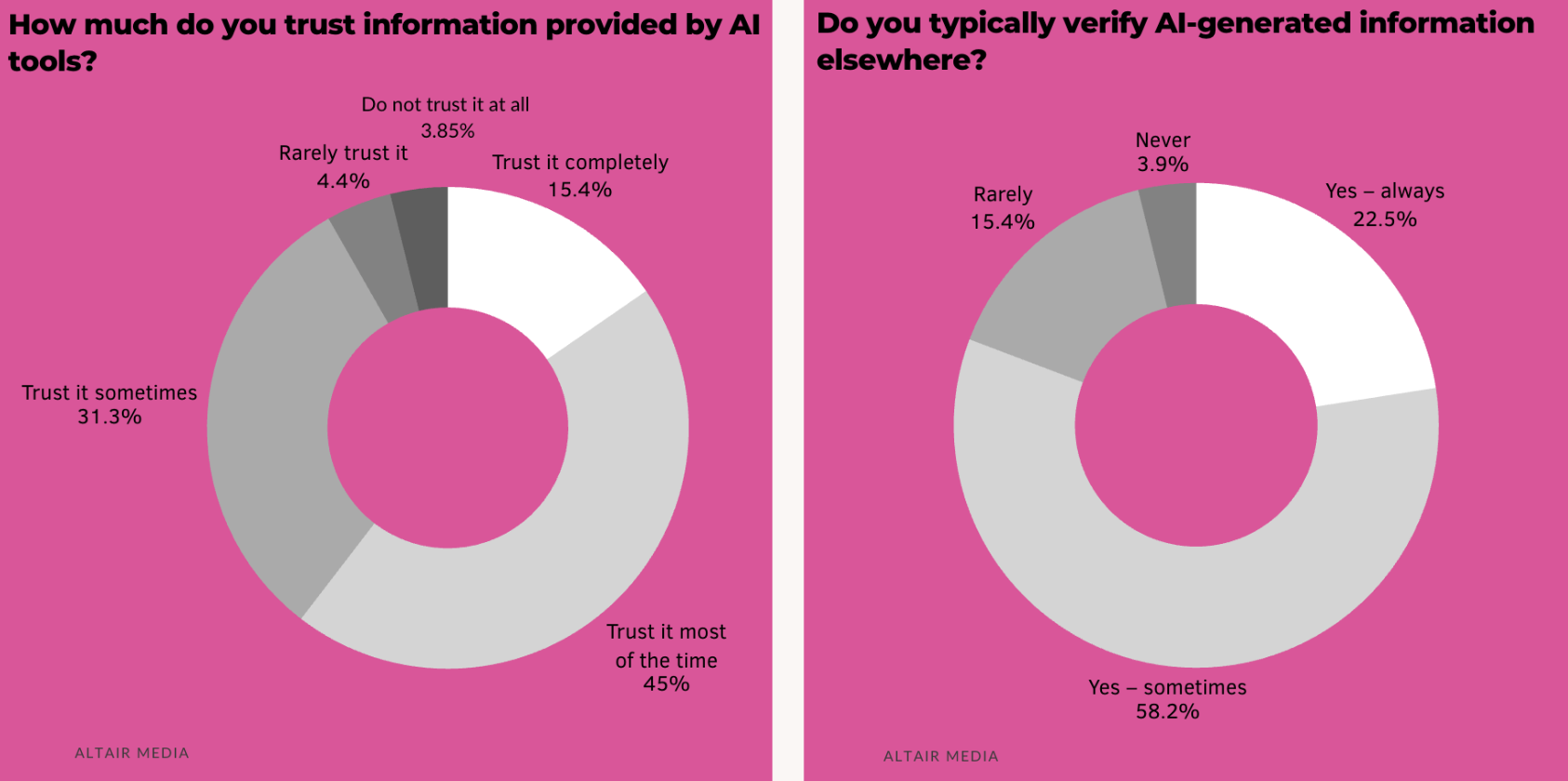
There are still question marks around trust. Although overall, 60% trust AI search most or all of the time, 80% of respondents still verify the information elsewhere at least some of the time.
It appears that while some users are actively shifting from search to AI, others are experimenting but not fully trusting and a meaningful proportion remain unsure or unaware they are even using AI tools. As is often the case, this brings both opportunity and risk.
Brands that optimise for AI-led discovery may gain disproportionate visibility among educated, urban, mid-to-younger audiences.

The Strategic Implication
We have seen that approximately one in five now rely on AI for search-like tasks and four in ten actively choose AI in some circumstances. Adoption is strongest among younger, urban and educated audiences. Although, we are still in the transition phase, if research is becoming more AI-driven, brands need to be optimising to meet this behaviour change.
AI is not replacing traditional search overnight, but it is steadily shaping how discovery and research happens, especially in some sectors. brands need to take control of their visibility to stay relevant and available to growing segments of the population.
Get in touch to learn how we can optimise your brand for AI

ChatGPT ads signal a shift in search behaviour. What brand marketers need to know about incrementality, zero-click impact and Google’s role.
.png?2025-12-12T18:14:47.508Z)
Programmatic ads are moving into AI chatbots. Here’s how publishers and brands can monetise conversational AI and regain control.

AI search, zero-click results and dark sharing are reshaping the B2B SaaS buyer journey. What senior marketers need to rethink for 2026.

Discover how brands use AI for visibility, smarter planning and faster insight to gain a competitive edge. Explore the highlights from Altair Inspires.