From Cost Centre to Value Creator: What Galleries Teach Marketing
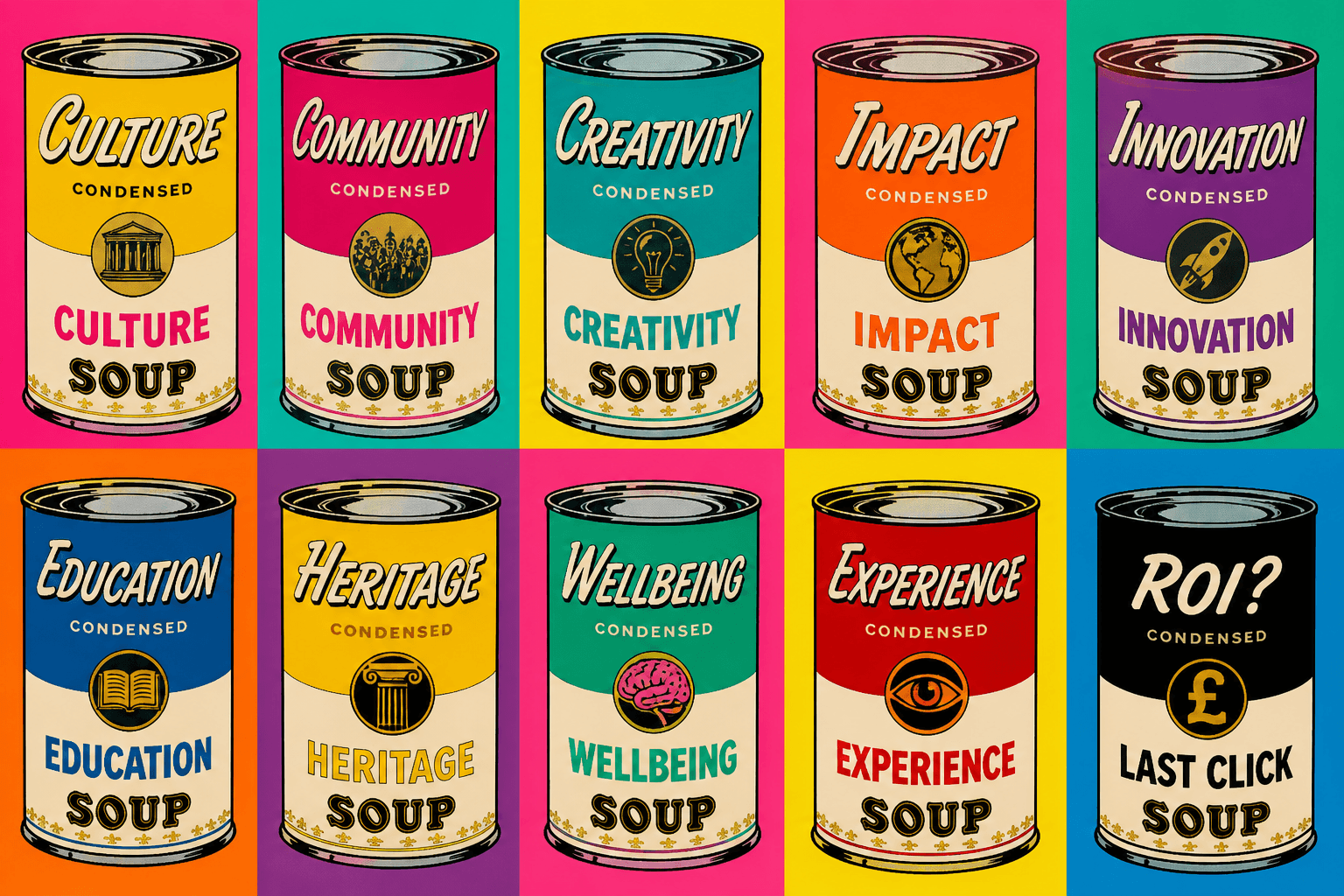
This week there is an absolutely brilliant article in the Financial Times:
Do art galleries need economists?
It’s well worth a read. The strategy is brilliant, as we will summarise below.
But the struggles in the culture world have very strong parallels with the world of marketing. So, if you work in a theatre, gallery, museum or heritage site marketing department, well you need to think about this.
Let’s dive in and examine the extremely clever positioning that is being called out in the article.
It is a pitch to reframe culture in the same way Mariana Mazzucato has reframed innovation policy: from “cost centre” to “value creator”.
This is strategically very smart, the main argument being that culture is a core part public value infrastructure.
And this is being articulated in a way governments might actually respond to: “Art delivers outcomes government already cares about”
Specifically, social cohesion, community engagement, health and wellbeing with an economic spillover. This is aligning culture with other investment areas such as transportation, education or urban regeneration. Investments, not costs.
At this point, it’s worth linking back to marketing.
Marketing on a profit and loss sheet is seen and treated as a cost centre, not an investment into a brand that will accumulate more and more value over time.
Which we discuss in more detail in a previous article: We Optimise To Just One Third of the Funnel.
Mazzucato then links this back to The Notting Hill Carnival as the perfect example, as it’s not just culture, it’s economic activity + identity + tourism + community cohesion.
The current system for financing institutions via government funding is producing exactly what it is incentivised to produce, but not what is important as cultural institutions are judged on metrics that don’t capture their real impact.
But governments are lazy and it’s easier to say “this generated £X in revenue” rather than trying to articulate social cohesion or we are doing this for “Brand Great Britain”.
Under the current system institutions are therefore still pushed towards:
- Blockbusters
- Safe programming
- Commercial exhibitions
The system is still optimised for scale (visitor numbers), not impact.
Which again, is incredibly similar to the marketing world where we are judging activity purely on last-click conversions or what any metric Meta pushes as instant gratification.
You end up underinvesting in awareness, long-term demand and cultural relevance.
Because you’re measuring the wrong thing.
The Keynes reference at the end is beautiful.
The UK invested in culture when it was poorer and more constrained than today.
That investment helped shape national identity and long-term value.
Moving on to the Whitechapel strategy. It is smart. It’s acting as a hub + network + platform focusing on an infrastructure that connects artists, communities and ideas.
In a way, it mirrors how media has shifted:
From channels to platforms
From campaigns to ecosystems
So conceptually, it’s aligned with broader economic shifts.
Finally, the leadership / sector fragmentation point is underrated.
Who are acting as a sector-level advocates?
It’s interesting, when we were at the Ticketing Professionals Conference this year, someone asked why institutions are not working together more, which was quickly hushed and we all moved on.
Why?
It’s a structural strength to have numbers working together.
Key takeaways from Ticketing Professionals: AI mindset, data vs insight, and how cultural sectors must evolve to keep pace.

Short-term metrics skew budgets. Brand and retention drive compounding growth, lower CAC and stronger long-term profits.

Meta’s Andromeda reshapes targeting, boosts automation, and increases brand dependency. Learn what it means for marketers and creative control.

In a world optimised for speed, museums are redesigning calm. Why experience quality — not spectacle — is the real battleground.